
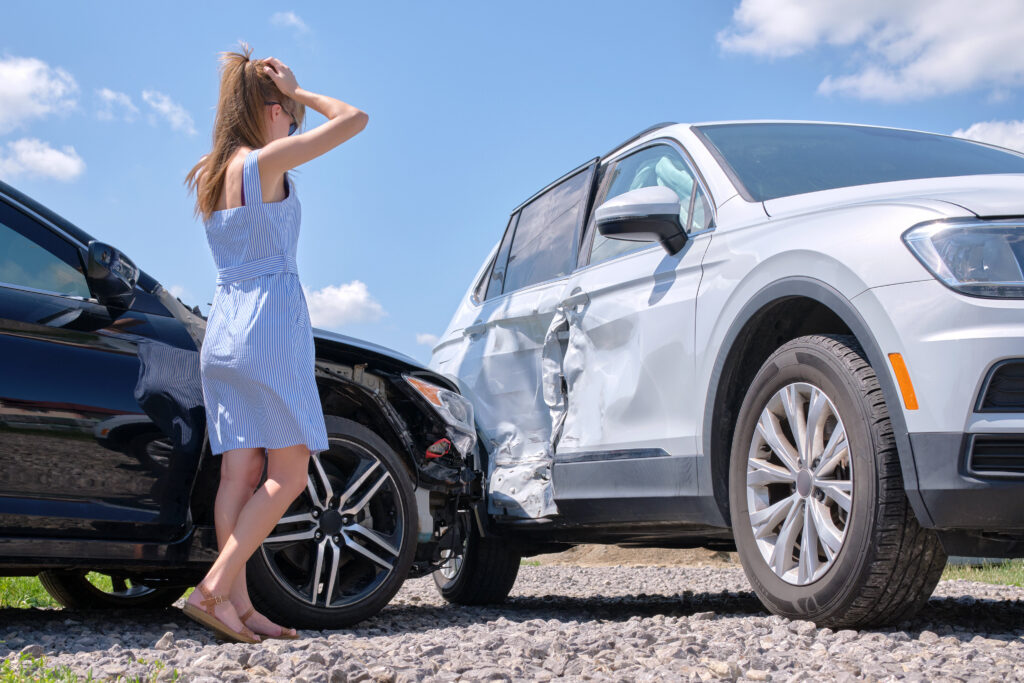
Getting hit by another driver is stressful enough without discovering afterward that they don’t carry any insurance at all. Knowing exactly what happens next, and what your own policy needs to cover before that moment arrives, can be the difference between a smooth claim and a financial mess that drags on for months.
Why This Happens More Often Than You’d Expect
Uninsured driving is far more common than most people assume, and it tends to catch victims off guard precisely because they never expected to be on the receiving end of it. Rates vary significantly by state, but in many parts of the country, somewhere between one in eight and one in six drivers on the road carries no insurance whatsoever, often because they’ve let a policy lapse due to missed payments or because they never carried one to begin with despite state requirements. Economic pressure tends to push these numbers higher during periods when premiums are rising faster than incomes, since insurance is one of the first expenses people cut when money gets tight. The problem is that the risk doesn’t show up on your radar until the moment you’re standing on the side of the road exchanging information with someone whose insurance card turns out to be expired or nonexistent. At that point, the legal reality is straightforward but often surprising: the other driver is still liable for your damages, but liability on paper does very little if they don’t have the money or coverage to actually pay.
Your Own Coverage Becomes the Safety Net
This is where uninsured motorist coverage, often abbreviated as UM coverage, becomes the single most important piece of your policy in this exact scenario. Rather than relying on the other driver’s nonexistent insurance or attempting to sue someone who likely doesn’t have meaningful assets to collect from, your UM coverage steps in and pays for your injuries and, depending on your state and policy, sometimes your vehicle damage as well. Many states actually require insurers to offer this coverage, and some require drivers to carry a minimum amount unless they specifically decline it in writing, which means a lot of people have this protection without realizing how central it is to this exact situation. The coverage typically splits into uninsured motorist bodily injury, which pays for medical costs, lost wages, and pain and suffering, and in some states a separate uninsured motorist property damage component that covers repairs to your car. Not every state bundles these the same way, and some rely on your collision coverage to handle vehicle damage while UM strictly covers injuries, so understanding exactly how your own policy is structured before an accident happens matters far more than trying to figure it out afterward.
What the Claims Process Actually Looks Like
Filing a claim against your own uninsured motorist coverage feels different from a typical claim against someone else’s insurer, and that difference catches a lot of people off guard. Because you’re essentially filing against your own policy, your insurer plays a somewhat adversarial role in evaluating the claim, verifying that the other driver was genuinely uninsured, and negotiating the payout amount, even though you’re still their customer. This means documentation matters enormously. A police report confirming the other driver lacked insurance, photos of the scene and damage, medical records tied directly to the accident, and any witness information all strengthen your position considerably. Insurers won’t simply take your word that the other driver had no coverage, so having that police report as objective confirmation early on saves significant back-and-forth later in the process. Settlement negotiations under UM claims can also take longer than a standard third-party claim, partly because there’s no opposing insurer pushing the process forward and partly because your own insurer has less external pressure to move quickly, so patience and consistent follow-up tend to serve claimants well here.
When the Other Driver Has Some Coverage But Not Enough
A related and equally important scenario involves drivers who carry insurance, but at levels so minimal that it doesn’t come close to covering your actual damages. This is where underinsured motorist coverage, often bundled with UM coverage under the same section of your policy, becomes relevant. If the at-fault driver’s liability limits max out at ten thousand dollars but your medical bills and vehicle repairs total forty thousand, underinsured motorist coverage can make up that gap rather than leaving you to absorb the difference out of pocket. The distinction between uninsured and underinsured coverage often confuses people because they function almost identically in practice, but the underinsured version specifically activates once the at-fault driver’s own insurance has paid out and proven insufficient. Reviewing your policy limits on this coverage matters just as much as reviewing your liability limits, since having generous underinsured protection is what actually protects you against the far more common scenario of hitting someone with a minimal, bare-bones policy rather than no policy at all.
Setting Your Coverage Limits Correctly Before You Need Them
The moment right after an accident is the worst possible time to discover your uninsured motorist limits are too low to cover what actually happened, which makes reviewing this coverage proactively one of the more valuable things you can do with your policy. A common mistake is matching your UM and underinsured limits to whatever your state’s minimum liability requirement happens to be, without considering that your actual medical costs or vehicle value could easily exceed that minimum by a wide margin. Increasing these limits is often surprisingly affordable relative to the protection it buys, since this coverage tends to be priced lower than comparable liability coverage, partly because insurers are pricing it against your own driving record rather than an unknown third party’s risk profile. It’s worth specifically asking your agent to walk through what your current limits would actually pay out in a serious injury scenario, since seeing the real numbers side by side tends to be far more persuasive than an abstract recommendation to “consider raising your limits.”
What to Do in the Moment It Happens
If you do find yourself in this situation, the steps you take at the scene directly shape how smoothly your eventual claim goes. Call the police regardless of how minor the accident seems, since an official report documenting that the other driver couldn’t provide valid insurance information becomes one of your strongest pieces of evidence later. Photograph the scene, the damage to both vehicles, and if possible, the other driver’s license plate and any information they’re willing to share, even if they claim to have insurance that turns out to be lapsed. Seek medical attention promptly for any injuries, even ones that seem minor at the moment, since adrenaline often masks pain that surfaces hours or days later, and a documented gap between the accident and your first medical visit can be used against you during claims negotiation. Notify your own insurer as soon as reasonably possible rather than waiting to see whether the other driver’s coverage situation resolves itself, since prompt reporting keeps your uninsured motorist claim moving and avoids any dispute over delayed notice.
The Bigger Picture on Protecting Yourself
Uninsured and underinsured drivers aren’t a rare edge case, they’re a real and fairly common risk on the road today, which means the coverage designed to protect you against them deserves the same attention most people give to their liability limits or collision deductible. Reviewing your policy now, confirming exactly what your UM and underinsured motorist limits actually are, and adjusting them if they seem thin relative to your area’s accident costs is one of the more overlooked ways to protect yourself financially. The goal isn’t to assume the worst will happen, but to make sure that if it does, your own policy does the heavy lifting that the other driver’s nonexistent or inadequate coverage can’t.